Frequently Asked Questions (FAQ)

If you do not find the answer here, we are ready to help you

💡 General

What is manufacturer responsibility for batteries?
EU legislation on producer responsibility for batteries means that companies producing or importing batteries in a Member State are legally and financially responsible for handling the batteries they put into circulation - even when they have expired.
When will the legislation for batteries come into force?
In Denmark, the rules came into force on 1 January 2009. This was done through the implementation of the previous EU Directive on manufacturer liability for batteries. The directive has now been amended into an EU regulation (Batteriforregden), which will have direct legal effect in Denmark from 2025.

In addition to the long text of the regulation, the Danish Environmental Protection Agency has issued an executive order with additional provisions to the battery regulation, such as requirements for membership in collective schemes.
What does the new battery law entail?
The regulation clarifies requirements for manufacturers, importers and sellers, as well as introduces new requirements such as battery passports, expanded categories and tightened collection targets. In future, manufacturers will have to be responsible for collecting portable batteries themselves and be members of a collective scheme.
Who are the public authorities behind producer responsibility?
The European Commission lays out the rules. The Danish Environment Agency and the Ministry of the Environment set the framework in Denmark, while the Danish Producer Responsibility (DPA) keeps a register and controls data.

🔋 Battery Categories

What new battery categories apply from August 18, 2025?
The regulation divides batteries into six categories with different weight limits and requirements, including portable batteries, LMT batteries, EV batteries, SLI batteries and two types of industrial batteries. Some categories require membership in a collective scheme.
Portable Batteries (<5kg)
All small batteries, both rechargeable and non-rechargeable, which do not belong to other categories. These require membership in a collective scheme.
LMT batteries (<25kg)
Batteries for light transport such as electric bicycles and scooters. These, too, require collective action.
EV batteries (>25 kg)
Batteries for electric and hybrid cars. There is no requirement for collective action here.
SLI Batteries
Batteries for starting, lighting and ignition in cars and machines. No requirement of collective order.
Industrial Battery #1 (>5 kg)
Specially designed for industrial use and does not fall under other categories. No collective order.
Industrial Battery #2 (Storage Batteries)
Batteries for energy storage and transport, regardless of the place of use. No collective order.

💰 Fees

Are there fees for registration and reporting?
Yes. There is a one-time registration fee and an annual reporting fee. If a collective scheme helps with administration, there will be extra costs.
What is an environmentally graded contribution?
It is an economic incentive that rewards batteries with better recyclability and lower levels of environmentally harmful substances such as cadmium and mercury.
How are the environmental graded contributions determined?
The EU and the Danish state define the criteria. The current model has been developed by the Environmental Protection Agency.
What criteria are weighted for graduation?
Primarily, the rechargeable capacity of the battery, as well as the quantity and type of substances hazardous to the environment.

👩 ‍ 🔬 Retailers and end users

The importance of proper collection and processing
Batteries contain various materials, including plastics and metals such as iron, nickel, cobalt and zinc. Almost all components in a battery can be recycled and used in new products, but only if the batteries are collected and properly handled.

When we collect batteries and other electrical waste, it is sent to our receiving facility. One of the first steps is a sorting process where all hazardous waste is sorted from.

Since batteries are classified as hazardous waste, they are sorted early in the process. The recycling method for each type of battery depends on the composition. Therefore, all collected batteries must be categorized.

Step-by-step treatment process:

Step 1) Batteries are categorized based on their size and chemistry content.

Step 2) Batteries containing mercury are separated from the rest.

Step 3) Once the batteries have been categorized, they are crushed and the materials become separated. For example, alkaline batteries (the most common type) consist of metal and a “black mass” containing carbon. These materials must be separated from each other.

Step 4) Plastics and various metals are further sorted and used for in the production of new products.
What does a duty of information mean?
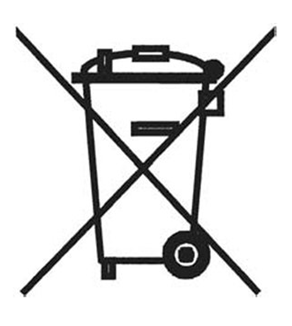
Companies must inform customers that batteries must not be thrown into general waste, but must be sorted and handed over for proper collection. Standard texts and proper labelling (crossed out bin) should be used in manuals or on websites.

See below.
Where to dispose of expired batteries?
All municipalities, as well as manufacturers/importers, have schemes where batteries can be picked up directly or dropped off free of charge at recycling stations and other collection points.

Download excel overview

👩 ‍ 🔬 Chemistry & Treatment

Alkaline batteries
Alkaline batteries are the most common batteries in the household and come in various shapes (round and square). Surprisingly, only a little less than 50% of batteries used in the household are collected and recycled.

Alkaline batteries consist of metal and “black mass” with e.g. zinc and manganese. Unfortunately, this mass cannot yet be fully (about 37%) recycled, so instead it is stored safely.
Lithium Batteries
Lithium batteries are so-called modern batteries and there are two different types.

1) Primary Lithium: These batteries cannot be recharged and used in watches, for example. Due to their small size, they are difficult to recycle. Instead, the focus is on transforming them into new energy.

2) Lithium-ion batteries: These rechargeable batteries are used in modern appliances such as laptops, mobile phones and electric cars. They are powerful and a more environmentally friendly alternative to e.g. Cadmium (Cd) batteries

Metals such as cobalt and lithium are mined for recycling. About 90% of the materials in lithium-ion batteries can be recycled.
Cadmium Batteries
Portable cadmium batteries have been banned since early 2024 due to their toxic content. To safely recycle them, their components are disassembled and handled in secure facilities.
Nickel-Metal Hydride Batteries
Nickel-metal hydride batteries are a modern variant, which have replaced cadmium batteries. We know them most often as AA rechargeable batteries, and up to 90% of the contents are recyclable.

These batteries can be recycled by extracting and melting down metals such as nickel and iron so they can be used in new products.
Lead-acid batteries
Lead-acid batteries are common in automobiles and can also be found in tools. They are called lead-acid batteries because they contain the heavy metal lead. Up to 74% of the materials from these batteries can be recycled.

The recycling process for lead-acid batteries involves first removing and neutralizing the acids in the battery. The lead is then extracted for reuse in new products.
Mercury Batteries
Mercury batteries contain the toxic heavy metal mercury, which is particularly harmful to the environment. At our operator, mercury batteries are separated from other batteries early in the treatment process.

The mercury is separated from all other battery materials and then stored safely to avoid affecting the environment. Other metals from the battery are sorted and recycled as normal.

Standard text and marking

Batteries contain substances that can be harmful to human health and the environment if not handled properly.

Batteries are labeled with the crossed-out trash can. It symbolizes that spent batteries must not be disposed of together with unsorted household waste, but must be collected separately.

Some batteries are also labeled with the chemical designation Hg (mercury), Cd (cadmium) or Pb (lead). These are particularly harmful substances and it is therefore important that these batteries are collected (this is only necessary if the battery contains the substances in question).

It is important that you hand over your spent batteries to the collection schemes that have been established. In this way, you help ensure that the batteries are recycled in accordance with the legislation and not unduly burdening the environment.

All municipalities and manufacturers/importers have established collection schemes where spent batteries are collected directly from households, or can be dropped off free of charge at recycling stations and other collection points.
Dashboard mockup

Can't find the answer?

We are ready to guide you through the extended manufacturer responsibility for batteries